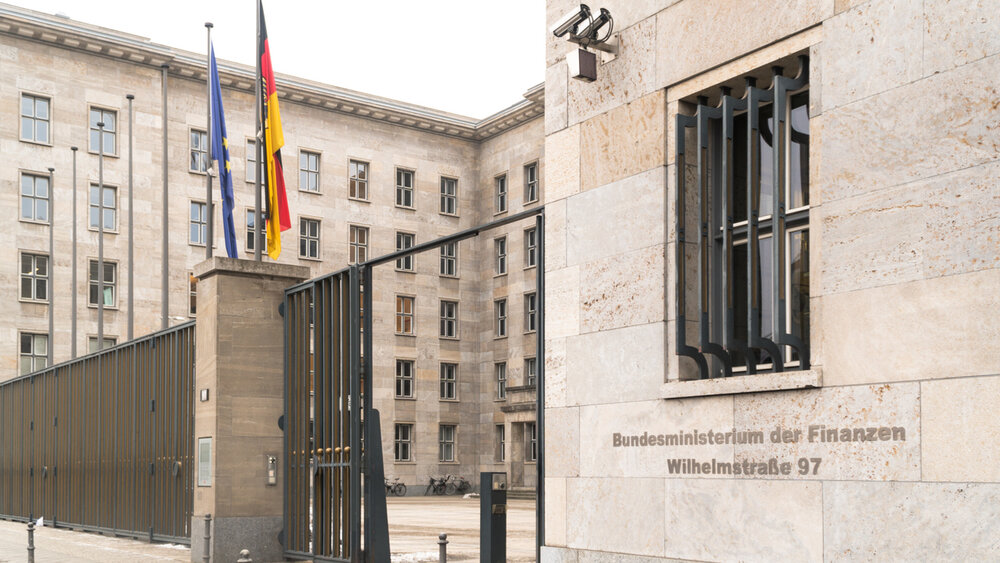
The national budgets of the federal government, the states, the municipalities and the social security funds have a volume of just under half of Germany's gross domestic product. After running deficits for decades, the state as a whole recently achieved surpluses before the Corona crisis. Thanks to low interest rates and rising revenues from taxes and social security contributions, Germany did not have to incur any new debt. However, the Corona crisis has again led to rising government spending, lower tax revenues and thus higher government debt overall, although the scope for government investment is limited by the debt brake. Germany currently has a debt level of more than two trillion euros.
About the topic
In addition to the openly disclosed debt, implicit debt lies dormant in the social system in the form of unfunded benefit commitments for pension, health and long-term care insurance. Germany currently spends around one-third of its economic output on social benefits, which already puts it in the lead among industrialized nations. Demographic change will place even greater demands on the social systems in the future.
The development of income and wealth inequality is the subject of much controversial debate in Germany. Although the inequality of disposable household incomes in Germany is higher today than it was at the beginning of the 1990s, it has not changed significantly since 2005. In an international comparison, it is low. For example, the top ten percent receive just over 30 percent of incomes. The wealthiest ten percent own around 60 percent of total assets. Consequently, wealth is distributed more unequally than disposable income. However, the upper class is not quite as aloof as these figures suggest: A large proportion of wealth is tied up in businesses that provide the livelihood for many millions of people in the form of jobs.
Due to technological progress, companies are increasingly looking for more highly qualified employees - with correspondingly higher salaries. At the same time, low-skilled workers face greater competition from workers from abroad. Because of these and other trends, income distribution in Germany - as in all industrialized countries - widened in the 1990s and up to the mid-2000s. Unlike most other countries, however, Germany was recently able to slow the income drift and fix it at the 2005 level. The good economic development and the unprecedented reduction in unemployment have improved the living situation of millions of people and stabilized income levels.
The state intervenes more strongly in income distribution in Germany than in many other countries, so inequality in Germany is low. As convoluted as the effects on redistribution are in detail, the result is clear: Those who earn more receive less state pay and pay higher taxes. Conversely, the less citizens earn, the more they receive from the state. The strong shoulders thus bear a heavier burden.
IW-Policy Paper No. 5 30. June 2026 Martin Beznoska / Tobias Hentze
Reform of Personal Income Tax
Reforming personal income tax has been on the political agenda for years. Although bracket creep has largely been offset over the past ten years, the income tax schedule itself has not been structurally reformed.
IW-Report No. 29 19. June 2026 Ruth Maria Schüler / Stefanie Seele
Abolition of the Additional Earnings Limit
The ageing population in Germany is increasing pressure on the social insurance systems and will (in the future) exacerbate the shortage of skilled labour.
IW-Trends No. 2 19. May 2026 Jochen Pimpertz / Maximilian Stockhausen
The Reform of Old-Age Pension Systems in Germany
Concerns about the risk of poverty in old age have prompted a multitude of reform proposals, most of which aim to introduce additional redistributive elements into Germany’s statutory pension scheme.
The national budgets of the federal government, the states, the municipalities and the social security funds have a volume of just under half of Germany's gross domestic product. After running deficits for decades, the state as a whole recently achieved surpluses before the Corona crisis. Thanks to low interest rates and rising revenues from taxes and social security contributions, Germany did not have to incur any new debt. However, the Corona crisis has again led to rising government spending, lower tax revenues and thus higher government debt overall, although the scope for government investment is limited by the debt brake. Germany currently has a debt level of more than two trillion euros.
The German Economic Institute (IW) and Frontier Economics are pleased to invite you to a rapporteur & stakeholder workshop on the Industrial Accelerator Act (IAA) in Brussels.
Event
28. September 2026
Sandra Parthie / Alexander Radunz
Online-Veranstaltungsreihe „Von Brüssel nach Berlin”: Regionalentwicklung und Industriepolitik
Wir laden Sie herzlich zu einer weiteren Online-Veranstaltung unserer Veranstaltungsreihe „Von Brüssel nach Berlin“ ein. Mit ihr wollen wir in loser Folge Themen aus der europäischen in die deutsche Hauptstadt tragen.
Making Apprenticeships a Success: From Marketing to Hiring
Paula Risius / Dirk Werner / Philip Herzer / Fritz Orange / Regina Flake / Franziska Arndt / Yasin Küçükyavuz / Edgar Schmitz
In-company vocational training is a key factor in securing skilled labour. The first step in investing in future employees is to approach and recruit new apprentices. For many companies, filling the apprenticeship positions they offer is a challenge.
GTIPA Perspectives: Making AI Policy to Drive Innovation
Vera Demary
Germany’s federal structure leads to a diverse landscape of AI policies across the country. While
the EU AI Act establishes a general framework for AI policy throughout the continent, Germany’s
federal government is responsible for national AI policies.
More and more companies in Europe are using artificial intelligence (AI) technologies. In 2025, one in five companies in the EU with 10 employees or more used at least one major AI technology, up from 8% in 2023 (Eurostat, 2026a).
European Minimum Wage Directive and Strengthening Collective Bargaining Coverage
Hagen Lesch / Lennart Eckle / Sandra Vogel
The EU Minimum Wage Directive recommends that EU Member States achieve a collective bargaining coverage of 80 per cent to ensure adequate minimum wages.
Your search returned an incorrect status. You may have selected too many filters. You can jump back to your previous selection to adjust your search.
Content element with id 9713
IW-Newsletter
Subscribe to our newsletters to receive updates on the latest IW publications. Sign up here to stay informed.
This website uses necessary cookies to ensure the operation of the website. You can allow or decline tracking. If you allow tracking, Matomo is used with cookies. You can find detailed information about the use of cookies in our privacy policy.
Warning: You are using an outdated browser!
Please switch to a modern browser (e.g. Google Chrome, Firefox or Microsoft Edge) in order to enjoy the best user experience.

 German Economic Institute (IW)